Tuesday, July 28, 2015

Jingo All the Way


Lazily copy-pasted from the Wikipedia entry on Article 9 of the Japanese Constitution:

In July 2014, Japan's government approved a reinterpretation of [Article 9] despite concerns and disapproval from its neighbors. This reinterpretation would allow Japan to exercise the right of "collective self defense"and exercise military action if one of its allies were to be attacked. It is considered by some parties as illegitimate, posing a serious danger to Japan’s democracy since the Prime Minister circumvented the constitutional amendment procedure, dictating a radical change to the meaning of fundamental principles in the Constitution by way of Cabinet fiat without Diet debate, vote, or public approval.

Basically, Japan is choosing to view the whole “you can't have an army” article as more guidelines than the law of the land. It's sparked controversy, of course, much like my own country's belief that you can bomb a country back into the Stone Age without ever calling it a war. Why do I bring up real-world politics at all? Because by God, knowing what's going on makes watching the currently-airing series Gate uncomfortable.

Does anyone remember that old sci-fi show Stargate SG-1? Where the U.S. Military travels through a mysterious gate to battle a technologically superior alien army?  Fun show.


Now imaging transposing that concept to an anime, changing the U.S. Army to the J.S.D.F. Forces and the science fiction setting to a fantasy one. Sounds cool; the concept of seeing a modern army taking on a horde of giants and dragons makes my mouth water. And to the show's credit, it doesn't wuss out by drowning us in endless dialogue. Plenty of series have made similar promises of action only to spend an eternity droning on about the world, about politics, about human nature, you name it. Here, we see the promised fights consistently, so kudos there. What makes this show a little despicable in my eyes is how unashamedly pro-military it is.

In the first few episodes alone, we've seen the J.S.D.F. slaughter entire armies with nary a casualty on their own side. We see a lone army member (the main character, incidentally) save hundreds by being smarter tactically than the entire Japanese police force, prompting a not-unwelcome flashback to Angel Cop; apparently regular cops are a bunch of pussies in this world, too. We learn quickly not to get excited when more action looms on the horizon, because it'll no doubt be a one-sided ass-kicking. Opening and ending credits linger so lovingly on shots of tanks and Humvees that it borders on the pornographic.

And yet in spite of this near-fetishization of military action, there's a bizarre attitude of nonchalance at times, most notably right after one of the aforementioned “battles”. Soldiers survey the corpse-choked field with not the slightest hint of interest or discomfort; just another day on the job, I guess. “Heard we killed about 60,000 of them. Do you think Shinji'll have that paperwork done by tomorrow?” In an interesting direction choice, we actually get to see many conflicts from the enemy's point of view. While some may view this as a downright even-handed method of showing a battle, I find it all the more disturbing since these perfectly capable, rational (mostly) human beings clearly have no chance of winning from the get-go, and watching them mowed down and dismissed as statistics isn't particularly pleasant.

This self-centered irreverence is best embodies by lead character Itami, self-professed otaku. Not the fun, quirky, or endearing sort of otaku, mind you, but the kind that views everything as a hassle. “Damn it, I have to be the lookout tonight. I wanted to spend it with my waifu.” “Ugh, I didn't even want that promotion I got through sheer luck!” “If forced to pick between my job and hobbies, I'd pick my hobbies without question.” His comrades consist of 1) other male otaku, 2) cute girl soldiers, and 3) cute girl fantasy stereotypes. Although we see Itami in military clothes doing military things like shooting guns, working out, and driving Humvees, it all feels wildly out of character for him. If just any job would do to support his hobby, why choose the one that is among the most difficult and dangerous? He sure as hell doesn't show any pride in his country, or interest in anything that isn't satirically generic anime, so why the military? 


Because Itami is about as obvious a self-insert character as you can get. He's meant to appeal to us, the assumed otaku audience. We're meant to think that we, too, can do cool things and be surrounded by cute girls and fun-loving otaku just like us in the military. Worst of all, we can do it without changing anything about who we are. The main reason I grew to despise Itami and why he feels so off as a character is because he doesn't act like he has any self-discipline or respect for authority that anyone would get drilled into them in a halfway-decent boot camp. If you're going to do a show about the military, that's fine, but do it with characters I can actually believe are in the military.

Besides the battle's aftermath described above, another great scene illustrating the show's poorly-hidden message is when blue-haired mage Lelei is traveling with some J.S.D.F.-escorted refugees. A horse gets spooked and flails around, putting her in physical danger. Rather than use any of the magic she has demonstrated mastery of, Lelei cleverly decides to freeze up and stare at the horse. A soldier puts a few bullets in the horse, because clearly nothing else could've been done. As it collapses, Lelei realizes, “Those people...they saved me.” The look in her eyes says she'll be a military fangirl for life, because they were awesome enough to do what she could've done easier.

Gate may be innocent, harmless fun when all is said and done, but this show more than most others I've seen really strikes me as irresponsible. I very much doubt the military is one big joyride as it's presented here, where elf girls and goth loli chicks fall all over you and your buddies because you're so cool. Am I a hypocrite for shitting on this show when the aforementioned Stargate (and, arguably, my own country) was guilty of favoring the military a little too much? Probably. But that show also dealt with shades of moral gray, and characters' decisions, even well-intentioned ones, often had dire consequences. There is not yet any indication that Gate will evolve beyond its Us vs. Them mindset, or feel like anything more than a joyride. Here's hoping I'm proven wrong.


...but I'm not holding my breath.

Tuesday, July 14, 2015

What the Devil?


Can something be awesome and annoying at the same time? Is it possible for a show to feel both half-assed and batshit crazy? Yes, it is. My recent watching of the 1972 series Devilman proves it beyond a doubt.

Another one of my blind purchases at Acen, I was unsure of what I'd get with this title. Looking to expand my knowledge of Go Nagai but unwilling to jump right into a long-runner like Mazinger Z or Getter Robo, this lesser-known work was where I settled. Turns out this was another good purchase, albeit one I'd have trouble recommending to many people.

The first few episodes erect a some barriers to entry right off the bad. First off, protagonist Akira Fudou, the titular Devilman, is a total asshole. Like, nowhere close to the “jerk with a heart of god” cliché, just plain unpleasant. Also, there's some pretty childish comic relief shoved in our faces, courtesy of buttmonkey teacher Alphonse-sensei and Taro's habit of wetting himself. Animation quality struggles to rise out of the toilet, and succeeds only rarely. The monster-of-the-week format could also be a turn-off for some, although I don't know who would even start this type of show without expecting it. On the plus side, the premise is an interesting twist on your typical superhero show, and Devilman's design kicks ass. Almost every episode has a respectable body count, as well; maybe that's just a selling point for me, but it's nice to see that an assault by demons comes with actual consequences.

How did this series eventually win me over? Well, Akira becomes much more likable as the series goes on. At the start he just had a weird “thing” for girlfriend Miki that even he couldn't explain, and would kill anything that threatened her happiness. As his new everyday life unfolds, however, he forms less passionate but still significant connections with others. There's not a specific point I remember when Akira's ideals change from complete self-interest to a more noble “gotta protect humanity regardless of personal cost”, but then again there doesn't really have to be. I choose to interpret his unheralded shift to heroism as a conscious choice rather than sloppy writing, at any rate.

He isn't the only person you warm up to. As the series goes on, more and more one-note characters get rounded out to some extent. Taro gets a grade-school crush that sounds dumb once you hear it, but actually inspires him to test his own fear-induced limits a couple times. The nerd you never thought you'd see past episode one makes a few scattered appearances in which he's revealed as a normal kid under incredible pressure from his parents, but capable of acting out in his own way. Alphonse-sensei's antics never really get funny, but they do gain an edge of self-awareness that make them bearable. Even some of the demons you end up rooting for.

And speaking of the demons, I'd have to say that they and the chaos they cause make the show. Whereas other stories tend to sustain their “tension” by simply one-upping the disposable enemy's power level next week, Devilman is like a box of chocolates: you never know what you're going to get. Okay, this week the demon appears to people in a mirror and takes over their hands, driving buses over cliffs, forcing people to strangle each other, you name it. Right, this week the demon takes the form of jewelry and shrinks whoever touches him, and then they get eaten by their cat or something. Now this time the demon takes the form of a popular celebrity, and his quirky-looking autograph eventually turns into a spider that jumps down people's throats. The show has this totally wild Grimm-fairy-tale-esque vibe where everything is always trying to kill you, no exceptions.

Is Devilman a fist-pumpingly good TV series? No, and honestly it's a bit of a slog sometimes. But it's something you watch for the little nuggets of bizarreness scattered throughout. Like when Devilman decides to transform while in a giant clam, and the transformation sequence takes place outside. Or when he inexplicably begins torturing a female demon for information by repeatedly whipping her nipple. Or the fact that everyone reacts to the Tower of Babel suddenly appearing in the local airport the same way we might react to a car crash. Sure, a well-crafted plot is very good thing, but there's also something to be said for how often Devilman can surprise the viewer. This show definitely won't be everyone's cup of tea, but I'm wholeheartedly glad I stuck it out.

Anyone out there a big Go Nagai fan? Tell me which of his works I should watch next! I know there's plenty to choose from, but what are your favorites?

Thursday, July 2, 2015

Spring 2015 Overview

Here we are again. It seemed like a slightly more “meh” season this time around, but of course that could be due to myself choosing shows poorly. After all, I never got to Seraph of the End or Is it Wrong to Pick Up Girls in a Dungeon, two of the most popular shows of the cour. But let's focus on what I did watch for now, shall we?

Sailor Moon Crystal

Though I've heard rumors of a second season coming soon, I won't be watching. Sure, this might mark the beginning of the part I haven't seen, the past year tells me it would be dull as dirt if adapted by this team. Just not worth it.

Fate/Stay Night: Unlimited Blade Works

Already posted my thoughts in a previous post; I won't waste your time taking another dump on this series here. Suffice it to say I don't blame anyone for liking this, but it sure wasn't my cup of tea.

Assassination Classroom

Another strong season, this one dealing more in arcs than stand-alone episodes. They did a good job introducing higher stakes for this half, and the characters were just as easy to root for. It also ended at a very good point, leaving me satisfied but thirsty for more. I'd call this one of the few really popular things that more or less deserves its popularity.

High School DxD Born

A lot like the previous season a few years back, this one ended a bit weakly, but the majority was very strong. This may be a fanservice series first and foremost, but the character drama does mostly hold up. It's like being reunited with old friends every time this show gets another season, friends who happen to be naked most of the time. Not a bad deal.

Triage X

I did a brief write-up on this a month or so ago, and at the end of its run I'd have to classify this as dumb fun. Like, really dumb, but not surreptitiously pervy like Highschool of the Dead. Give it a shot if you're looking for a quick dose of fanservice, although it looks like next season's lineup will have us all covered in that respect.

The Disappearance of Nagato Yuki-chan

I'm a little surprised how many times this show changed form, in retrospect. It started off as an interesting twist on its parent franchise, then devolved into a pale imitator of said parent, then took a hard right turn I wasn't expecting a little too late in its run. I can't really recommend this one because it has such long stretches of mind-numbing mediocrity, but it's not like there's nothing interesting here. Just not enough to save the franchise.

The Heroic Legend of Arslan

In this show's defense, it does a better job at character building than the OVAs from the 90s. Better, it seems to have been planned out so that it'll actually tell us the whole story rather than run out of money. However, I can't help but be irritated every time a lame joke is pushed (So and so is a bad painter! So and so can't get a girl!), then punctuated with sweat drops, or sparkles, or funny faces. The original carried itself with such dignity that this show just feels incredibly cheap in comparison, a feeling not helped by the necessary yet painful reliance on CG. An epic like this shouldn't ever feel cheap. Even scarier, I've heard that a new adaptation of Legend of the Galactic Heroes may be in the works; so help me if it suffers the same treatment.

Blood Blockade Battlefront

Possibly the most outright fun of anything this season, and also the most visually creative. Pretty much every episode was great in some way, whether it chose to tackle action, drama, or just plain comedy. I do wish we got to know the characters better; by and large, it isn't explained why most of them do what they do, how they got their powers, or any other backstory elements. I admit it's not strictly necessary for this show, but a few flashback episodes would do wonders towards giving the team depth. Otherwise, I'm hard-put to think of any complaints.

Ninja Slayer

This was . . . different from what I expected. I get now that we're supposed to watch it as a comedy, and it certainly does have its funny moments, as well as its badass ones. But truth be told, I think Inferno Cop from a few years back was more consistently funny. I'm enjoying myself, though; there's not much else out there that's this damn weird.

Knights of Sidonia: The Ninth Planet Crusade

I did a write-up praising the first season a while back, and while this one was good, it didn't quite reach the same heights. I'd compare it to Nisemonogatari; probably a good show on the second watch that's great with subtle character building, but a little infuriating upon first watch thanks to its sluggish pace. There were just too many tranquil episodes when we should have been on the edge of our seat, left breathless as the last of humanity is pursued by a relentless enemy. Still, when the show chose to get good, it got really good, and I hope people are interested enough in the series that we'll be seeing more.

Plastic Memories

The opening episode, the closing episode, and maybe one or two in the middle proved that this could be a great show. The rest of the show proved that it just didn't care enough to attempt any sort of greatness. The two main characters, despite facing a compelling dilemma, constantly reverts to the same dumbass hijinks we see in subpar romantic comedies. Worse, they can't seem to do anything without the input of their nosy, annoying, stereotypical coworkers. It wouldn't take much to make this show a lot better, but there you have it.

Ore Monogatari!

This show is exactly as sweetly insubstantial as the many pastries it includes. There's truthfully quite little in the way of conflict, but you still get surprisingly invested in its main characters. They're just so adorable, which isn't something I normally look for in my anime, but I found myself rooting for them every time an easily-resolved conflict popped up. Glad this'll be going on for a little longer.

Hibike! Euphonium

Watched this because I was a huge band geek for most of my life, and this does capture the general feeling of being in a high school band. The needlessly dramatic portion of petty infighting, at least. I was really wishing for more of a “hell yeah, band is awesome!” mindset, and couldn't really connect with the characters at all. Not that I'm opposed to drama, but I'm just so done with the petty rivalries and crushes that this latest take on high school is all about. Too bad.

Ghost in the Shell Arise: Alternative Architecture

I'm a little ashamed that I enjoyed neither this show nor Fate, since both were clearly ambitious, and yet Ghost in the Shell has failed to wow me for a while now. Something about how the extremely dense plot is always explained by talking heads, or maybe how the Major is a little too perfect a character just hasn't sat well with me. I give this new show credit on a couple fronts, however. First, although I view it as a largely unnecessary entry, there's very little dead weight here; the series doesn't overstay its welcome. Second, it's visually very nice to look at, the Major's constantly angry facial design notwithstanding. Worth a watch if you haven't gotten your Ghost in the Shell fix yet, otherwise it's not exactly essential viewing.

And that's all! If you think I missed something important, let me know!

Friday, June 26, 2015

Fate/Stay Why?

Is it wrong to critique a show for failing to reach its lofty ambitions? Am I a horrible person for craving mindless action instead of the philosophical navel-gazing a certain show actually provides? Probably. But as it nears the end of its run, I feel compelled to shout from the rooftops that I don't like Fate/Stay Night.

Admittedly, my familiarity with the Nasuverse is limited. I watched the Fate/Zero prequel when it aired a few years ago, am currently watching Fate/Stay Night: Unlimited Blade Works (obviously), and snuck in Garden of Sinners at some point in between. I have not and do not intend to partake of the visual novels or original anime series, which I'm sure damns me in the eyes of many fans. Yet as I hear more and more people praising this show, a show that's clearly succeeding in introducing many people to an already successful franchise, I almost feel I need to explain myself. To explore my own feelings and discover why this whole thing left me so cold.

First of all, the major characters aren't compelling. Not beyond a basic feeling of, “Gee, I hope the good guys get what they want and the assholes get punished”. Shirou stays more or less the same everyman with a heart of gold throughout the series' run, while Saber, despite having her own fairly complex motivation, is too passively honor-bound to do anything but whatever she's ordered to. Rin, although the brainiest of the three and fairly complex herself, feels like she's being injected with a syringe full of Generic Tsundere between shots. I don't envy whoever had to add layers to what was an interchangeable potential love interest in the VN, but we're supposed to take this world completely seriously; why does she feel like she came from an uninspired romantic comedy at times?

Unlike the Waver/Rider dynamic from Fate/Zero, there's no salvation in the secondary characters. At best you'll get your annoying, nosy, hard-drinking older female teacher freeloading at Shirou's place, contributing nothing to the plot. At worst you'll get a scene where a genki girl we'll never see again threatens Shirou with a vaulting pole until her stoic, emotionless friend (?) sits on her and apologizes for her companion's rudeness. That's relateable, right? Suffice it to say, if your character isn't the mouthpiece for a specific worldview who monologues in 5,000 words what could be stated in 50, you're doomed to be one hell of an insult to the viewers' intelligence.

Speaking of worldviews, one of the show's major themes contains a glaring flaw in my eyes. It pounds into our heads over and over that Shirou's goal of helping everyone, of becoming a hero of justice is unrealistic. The world is much too complicated for that, and by extension all such wishes are naïve and destructive, as shown by a malicious Grail and Shirou's “tragic” transformation into Archer. I use quotes because anyone past puberty should realize you can't solve all problems with a wish. There's a big, fat difference between a boy wanting to save everyone and a man letting greedy people manipulate him right to the gallows; it's a little insulting that the show would even compare the two seriously. Like Fate/Zero, it almost seems like the show is intent on punishing any and all idealism. Critics may call this a deconstruction, but I call it cynical and quite sloppy.

My final complaint is that the world of Fate, while initially interesting, does not work. You'd think a world exactly like ours but with magic would be both relateable and cool, right? Well, that's right until you realize the implication: magic affects nothing. There are people who shoot energy bullets and summon skeleton warriors, yet neither laws, politics, or people's everyday lives are affected. Hell, apparently five people have made wishes on the all-powerful, reality-warping Grail, and yet history remains unaltered (scratch that; if I'm reading a certain wiki right, the Grail has never actually granted a wish because reasons)! When magical battles hurt civilians or cause collateral damage (which is rare; so much fighting occurs in isolated locations or abandoned buildings), there's no appropriate response from the authorities afterward. No investigation that turns up anything. No manhunt for who's responsible, or preventive measures taken in case Cthulu is summoned again. Magic doesn't exist for the purpose of doing cool things, it exists so a few rich asshole families can maintain their personal power. Magic exists so the self-insert, everyman protagonist can discover a secret, “cool” world of mages hiding in the shadows of our own.

Oh, and there's no rhyme or reason to how the magic works. There are plenty of rules established, sure, and explained to us in detail right when the fight was getting good. But I kept having flashbacks to Nisemonogatari's brief and humorous mentions of the Unlimited Rulebook: a book of supposed rules that's really mostly exceptions. For example, at one point Caster prepares to summon the Grail early because there's actually a Lesser Grail, you see, that can be summoned early. Servants are supposed to disappear immediately after their Masters die, cutting off their source of Mana, but at least twice Servants stick around for days due to special circumstances. Caster literally has an ability called Rule Breaker. The list goes on.

And actually, I think that free-for-all attitude should have permeated the entire show. Past heroes being summoned to the present to duke it out? That right there is a fun premise. But so much effort is being wasted on convincing the audience that this is serious business, you guys. These issues are weighty and complex. These characters are nuanced and tragic. This world is detailed and functions realistically. This totally wasn't based on a porn game. In truth, there's only so much gravitas you can wring out of this source material before it becomes ridiculous to those who aren't already passionate fans.

Fate/Stay Night: Unlimited Blade Works does plenty of things right, of course. The music's great and so is the action, when it's not being interrupted. The references to numerous heroic legends are a nice touch, can character designs have always been exceptional. There are good reasons so many fans of this exist, and I don't despise the fandom when acknowledging myself an outlier on this. But I can't help but marvel at how this show is so popular when it has so many problems I can't get over. The franchise will surely march on with or without my approval, but my overall impression remains negative, for whatever that's worth.

Monday, June 15, 2015

A Blind Stab in the Dark


Let's get the obvious question out of the way first: Why the hell would I subject myself to a Japanese children's cartoon from the 60s? Isn't that a bit unnecessary, possibly masochistic, even for a devoted anime fan? It turns out those questions become irrelevant roughly two seconds into Horus: Prince of the Sun, when we're treated to our hero having a sickass fight with a pack of wolves.


A little background. Horus was the 1968 debut of Isao Takahata, known most recently for The Tale of Princess Kaguya but best known for Grave of the Fireflies. Created during brutal labor disputes at Toei, this film went way over budget, was pulled from theaters after just ten days by the studio itself, and killed Takahata's career at said studio. This is a movie with stories behind it that I could go into, but won't because they aren't what initially impressed me. What's happening onscreen is impressive enough.

If I were to describe the appeal of Horus in a sentence, I'd say it takes your typical epic, fantasy-based adventure and populates it with unusually human characters. Sure, there's the evil wizard Grunwald who must be stopped. A handful of magical creatures must be defeated before the final battle can occur. There's no shortage of well-animated action scenes in this film, except for a few battles consisting of still frames even an inflated budget couldn't support. Even so, dynamic camera movement and some great art convey the scope of such scenes.

But it's the internal wars which keep Horus from being just an animator's playhouse. The title character must not simply work to defeat Grunwald, but to keep a town full of essentially good people from destroying itself through selfish fear. Grunwald himself betrays desperation and a strange loneliness at times. Hilda, the most interesting character by far, is constantly beset by inner turmoil. She practically hijacks the movie despite not appearing until the halfway point; it's pretty clear to see where the future tradition of strong, self-reliant, yet conflicted Ghibli heroines came from.

Sure, Horus: Prince of the Sun is pretty darn old at this point, but it still deserves more recognition today. Every aspect of the film just oozes ambition, meaning it's still impressive decades later. I wasn't sure what I was getting into when blind-buying the disc, but found myself
a lot richer after the viewing. Do yourself a favor and give it a shot.

And if you're still not convinced, Grunwald rides an ice elephant into battle at the end.

Yeah.

Monday, June 8, 2015

Art Attack


What's this? A book review on an anime blog? Damn right; I consider Helen McCarthy's 2009 book The Art of Osamu Tezuka possibly the best find of my splurge at the Anime Central dealer's room, so of course I'm going to post about it here. I'll assume (maybe mistakenly) that my readers at least know of Tezuka's existence. He was one of the first great manga authors/animators, and he created a lot of stuff. Fans of anime and manga can get by just fine with that basic knowledge.

It's fans who want to dig deeper for which this book is borderline required reading.

See, TAOOT clarifies “a lot of stuff” as about 700 different manga titles and over 70 animated titles, not counting the many adaptations of Tezuka's work after his death. He also wrote many scholarly essays, traveled often giving lectures, and apparently had an extensive network of influential friends not limited to figures in comics and animation. Oh, and was a graduate of medical school. There are just so many interesting details about this man and projects he was involved in, investigating his life is a daunting task, almost certainly doomed to a flaming wreck of confusion and amazement.

That's where this book comes in.

Its strength is in its simplicity and clarity. McCarthy divides her research mostly by chronological decade, and focuses on a few key themes for each. These sections are bookended by a brief synopsis of major works during that timeframe and a preface summarizing the major events which had an impact on Tezuka's art. I get the sense that McCarthy could have squeezed more information into each chapter's body, but as casual readers would no doubt be repelled by countless anecdotes of Tezuka's contemporaries or in-depth explanations of the animation process. TAOOT shoots for the Tezuka 101 approach instead of bombarding us with little-known facts; we're helpfully informed in the text when an event will have a payoff in the far future, for instance. Captioned pictures are everywhere, and my personal favorite section would have to be the visual guide of Tezuka's star system. A lot of finer details might be lost on readers unfamiliar with anime and manga, but I think this work is captivating enough from a purely biographical standpoint.

McCarthy is careful to treat Tezuka with respect instead of the reverence many scholars take when discussing him (or his supposed modern equivalent, Hayao Miyazaki). She emphasizes the central themes that run through his stories by examining how his personal life shaped that worldview. It's pointed out that even Tezuka could not fully control his own characters; Astro Boy's first incarnation was never intended as more than a side character until Tezuka responded to positive fan response, and fan response also prevented on-again-off-again villain Rock Holmes from crossing certain moral lines more than once. Ironically, I'm a little more inclined to reverence even after hearing about the man behind the myth. He just never stopped working, drawing, producing. His bad ideas and financial bombs could have (and probably did) numbered in the dozens, and they'd barely be a drop in the bucket of his life's work.

We get a better look at the man himself via a DVD accompaniment, containing an hour-long special aired on Japanese TV before Tezuka's death. Here, we get to see Tezuka interact with fans, friends, and co-workers as a manga deadline looms ever closer. To me, it almost seemed there were two sides of Tezuka: the outgoing social butterfly with a million connections and a fascination with everything, and the eccentric, somewhat brusque creator who must hide himself away to wrestle with his art. Although much too short to get a good feel for this guy, the disc serves as an unexpected cherry on top of the release.

The Art of Osamu Tezuka is a fascinating, informative, and wholly worthwhile read regardless of if you're a diehard manga or anime fan. By far my biggest complaint is that it's not part of a series; I'd love to wade through similar breakdowns of other important industry figures. As it stands, though, Helen McCarthy has done an admirable job with this book, and I strongly recommend you keep an eye out for her titles at your next convention.

Monday, June 1, 2015

All Aboard!


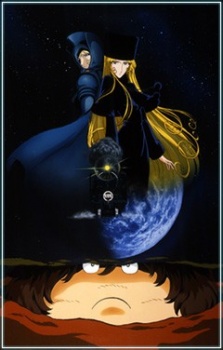
Despite trying my best to watch as many “auteur” works of anime as as I can, there are some creators I've really never grown to love. Rintaro is one of these; I've seen a good number of his films over the years, but none made much of an impression on me. On that note, I'd always respected Leiji Matsumoto, but felt his body of work was a bit of a relic. If I met the guy, would he start ranting about “kids these days” and how things were “in the old days”? I like to think so. So when I popped in Rintaro's two Galaxy Express 999 films, I was unsure what to expect. Didn't expect pure love.

Galaxy Express 999 is a hero's quest in its purest form: young Tetsuro gets whisked away on a journey by some mysterious figure, and changes along the way. It's been done many a time before, but mixing that formula with classic science fiction just hits a sweet spot for me; think the original Star Wars, and you have a pretty good idea of the film's vibe. Locations such as Pluto and Heavy Melder are every bit as imaginative and memorable as Tatooine and the Death Star. Ditto for the side characters. Most everyone Tetsuro meets seems to carry the weight of a well-developed personality and backstory. No, I don't just mean the Captain Harlock carry-overs. Everyone from Count Mecha to Claire to the Conductor was engaging to some degree.

It's these things aspects that keep the film's relatively slow pace from feeling oppressive. I also found myself focusing on said characters and locations rather than Matsumoto's super-conservative and somewhat destructive viewpoints, which until now had kept me an arm's length away from his work. You kinda have to accept that the heroes should never compromise on their beliefs no matter how much it may benefit the universe, and that all the lives and planets they destroy had it coming, somehow. Arguments could easily be made concerning how Tetsuro's and Harlock's actions are incredibly wrong, but I'm happy to push those out of my head and enjoy the show.

How, then, would Adieu Galaxy Express 999 follow up on such a fun, engaging adventure? By blowing the first film out of the water, right from the first scene. Now there's how you animate a brutal, uncompromising ground war against an implacable enemy. Although the plot may appear similar to the first movie in that Tetsuro must board the 999 on an adventure, the feel is quite different. It's shown early on that anyone can die, the 999 itself seems to be constantly in danger, and even the train's route remains a mystery. The strange world of adulthood Tetsuro discovered before is now re-examined, questioned. There aren't easy answers given to us like in the first movie; if Galaxy Express 999 was about finding your place in the universe, Adieu is about what we leave behind, never to be found again.

Generous . . . borrowing of certain elements from The Empire Strikes Back does little to diminish this movie in my eyes, nor do the opening measures of John Williams' Superman theme. Like its predecessor, Adieu Galaxy Express 999 may drag at times and wax melodramatic at others. I for one think these movies earn the emotional weight they go for. They take their characters seriously, do a good job with tried-and-true stories, and there's eye candy of every kind. Galaxy Express 999 is one ride that's definitely worth the ticket price.